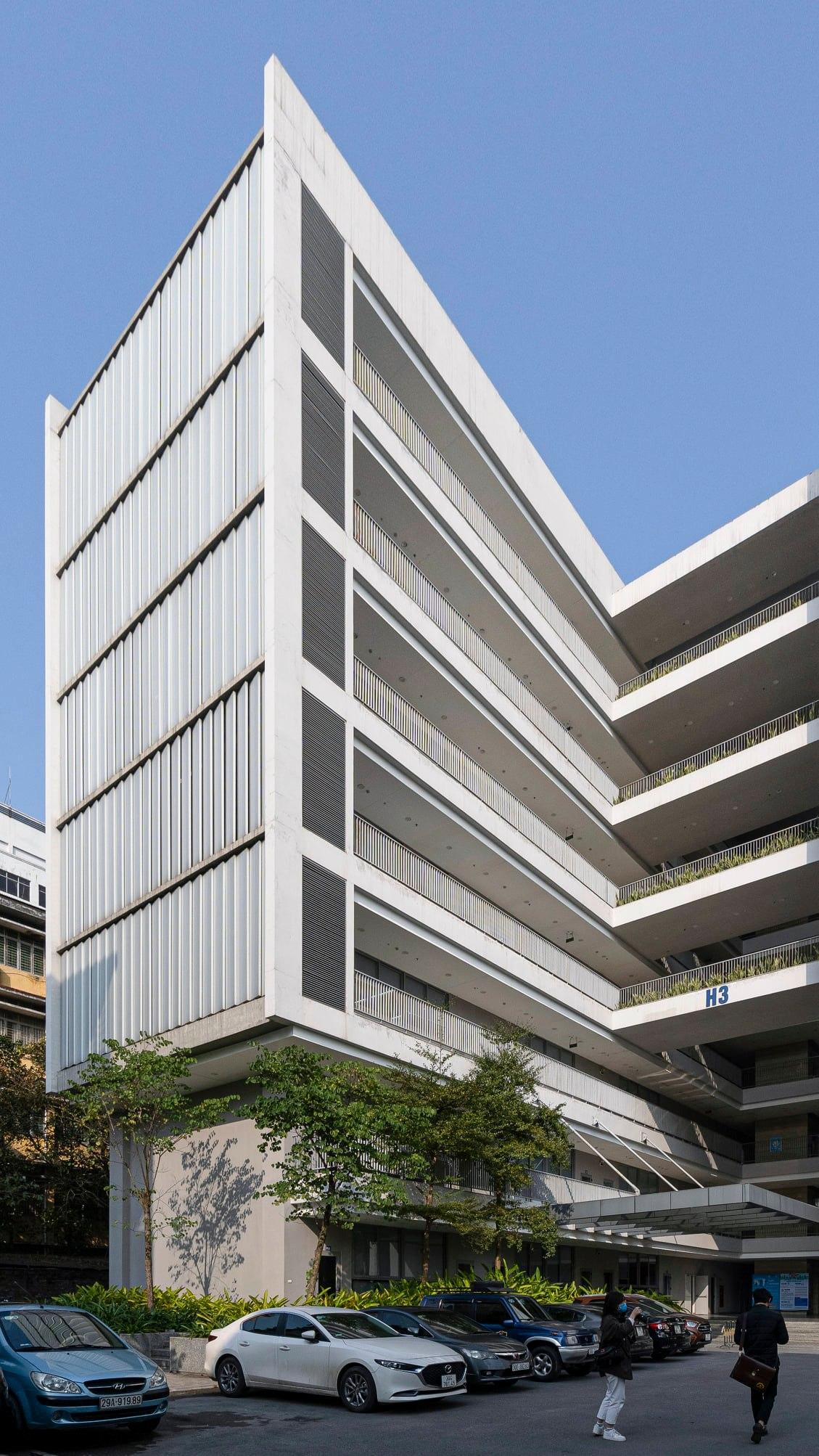
FACILITIES AND HUMAN RESOURCES
INFRASTRUCTURE AND FACILITIES FOR ARCHITECTURE EDUCATION
The Architecture program is implemented on the foundation of the modern infrastructure of Hanoi University of Civil Engineering, combined with specialized learning and research spaces managed by the Faculty of Architecture and Urban Planning. The entire system is continuously maintained, updated, and improved to meet the requirements of teaching and research in the contemporary context.
a. General Teaching and Research Facilities
Training Scale:
The University’s main campus in Hanoi covers approximately 3.9 hectares, complemented by an experimental campus in Ha Nam spanning over 24 hectares, effectively supporting practical training and research activities.
Classrooms:
There are 99 classrooms with capacities ranging from 50 to 150 seats. The average ratio is 45 students per lecture room, meeting the standards of the Ministry of Education and Training.
Laboratories and Workshops:
The University has 16 specialized laboratories and workshops for technical disciplines. Equipment is regularly updated, with utilization rates exceeding 80%, ensuring effective support for teaching and research activities.
b. Faculty-Specific Facilities
Research and Practice Spaces:
The Faculty manages a dedicated Architecture Physics Laboratory and a Model Workshop, directly serving specialized training needs.
C4 Innovation Learning Space:
Renovated with a total area of 1,250 m², this space promotes creative and innovative learning, including:
7 specialized classrooms/design studios (25–105 m²)
1 multipurpose covered space (130 m²)
Garden and social/academic interaction area (470 m²)
c. Library and Information Technology Systems
Traditional Library:
The central library covers over 7,100 m², housing more than 118,000 book titles with a total of approximately 177,672 items.
Digital Library:
Regularly updated, providing digital materials and access to domestic and international scientific databases; the system is continuously expanded to strengthen specialized learning resources.
Information Technology System:
Includes campus-wide Wi-Fi, synchronized computer systems, and licensed specialized software such as AutoCAD, Revit, SketchUp, and SPSS, maximizing support for teaching and research activities.
Development Orientation:
The University plans to invest in a Virtual Design Laboratory from late 2025 to 2026, aiming to enhance the learning experience and the application of technology in education.